
The “Good Food Every Day – Sustainable Food Education for Schools” project offers Finnish schools an expert for a day to promote students’ school meal consumption and their participation in planning school meals. In this blog post, Master’s student in human nutrition and food related behaviour Anna-Maya Sipilä reflects on her experiences participating in an elementary school visit in Finland and compares them with her experiences in food education in the United States.
A meal in the school cafeteria is about much more than fueling students’ bodies for the rest of the afternoon. A student may try a new food and ask for it again at home. They may also get the majority of their daily fruit and vegetable intake. It is also an important social time for children to connect with peers and enjoy a well-deserved break. However, discussions about food should not only stay in the cafeteria. Expanding food education through all facets of school can enhance well-being, health, and enjoyment for the students and school community. When children develop a stronger understanding of food such as where it comes from, how it nourishes them, and how it brings people together, they feel empowered to make healthier choices.
From my experience as a food educator in Connecticut, U.S., and as a volunteer at a Finnish primary school with Ruukku, I have seen the importance of food education for all children. My position in the U.S. was through the nonprofit program FoodCorps (Visit an external site. The link will open in a new tab.), which places service members in schools throughout the country. Often these school districts are in lower-socioeconomic communities and qualify for government-subsidized meals, meaning that students’ families receive financial support for food. Service members serve a year-long term during which they teach food-related lessons in classrooms, host taste tests in the cafeteria, support the school garden, facilitate after-school activities, and carry out a variety of other food-related projects.
The most impactful of these projects was the after-school cooking program. Students explored a variety of foods through hands-on activities while building important cooking skills. Many students tried new foods and were surprised to find they enjoyed them. Parents shared that their children brought recipes home and were eager to recreate them. These experiences were also possible in the classroom during some of my lessons. I taught in more than 15 classrooms, visiting each from once a week to once a month. Bringing food into the classroom generated the most excitement among students and fostered positive food-related attitudes and experiences.
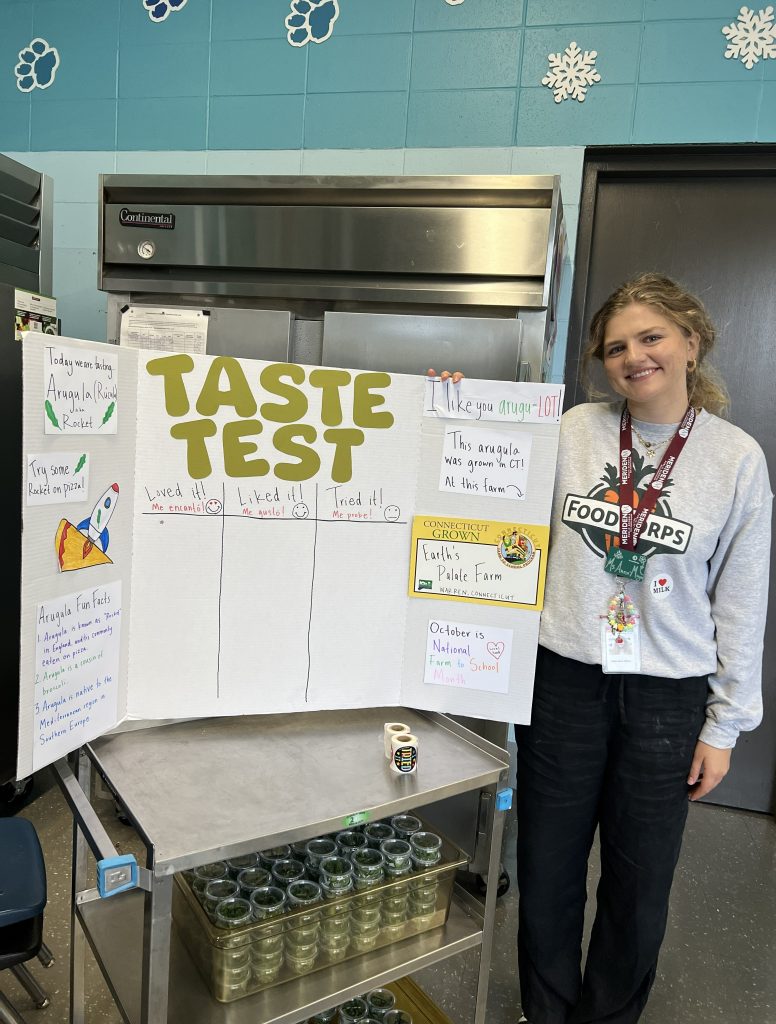
Arugula taste test in October 2023 in U.S. (pictured: Anna-Maya Sipilä)
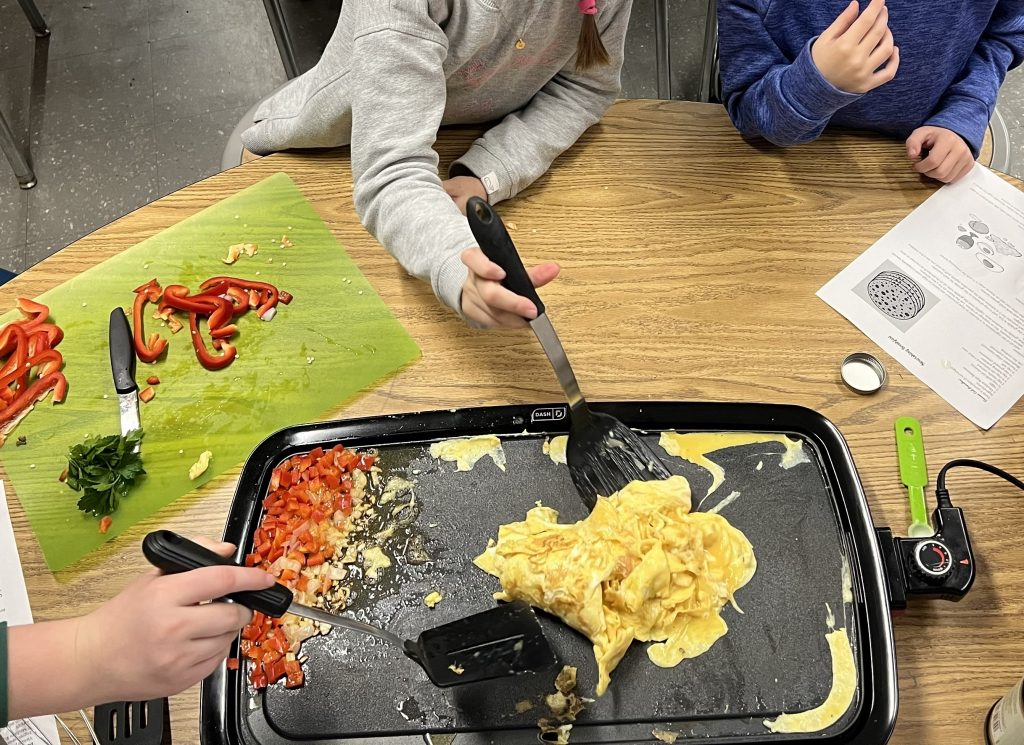
After-school cooking class in November 2023 in U.S.
During my school visit with Ruukku, I participated in a Taste School workshop centered around engaging, sensory-based activities. These school visits are a part of the project “Good Food, Every Day – Sustainable Food Education for Schools” (Visit an external site. The link will open in a new tab.), which is funded by the Ministry of Agriculture and Forestry from 2025-2027. At the workshop, students rotated through stations exploring each of the five senses, as well as a dedicated station where they discussed and shared written feedback about their school lunch experience. In a single morning, we welcomed all fourth-grade students and two sixth grade classes. The energy in the room was high, with the tasting station generating the most enthusiasm.
Beyond exploring taste, smell, sound, sight, and touch, each activity carried a deeper educational purpose. At the sight station, which I facilitated, students were introduced to fiber-rich foods such as crispbread, beans, mandarin, cauliflower, and more. They were encouraged to freely handle and explore the foods while also learning why fiber matters and which foods contain it. Additionally, the station included a whole fennel, which students were invited to identify. Fennel also appeared at the tasting station. Introducing the same food across multiple stations proved to be a powerful approach, reinforcing familiarity and curiosity. Even for students hesitant to taste something new, the simple act of exploring it through touch became a meaningful first step. Participating in this workshop reinforced the value of hands-on, sensory-based learning as an entry point into broader conversations about food, health, and well-being, and it also brought back some great memories of my time in Connecticut.
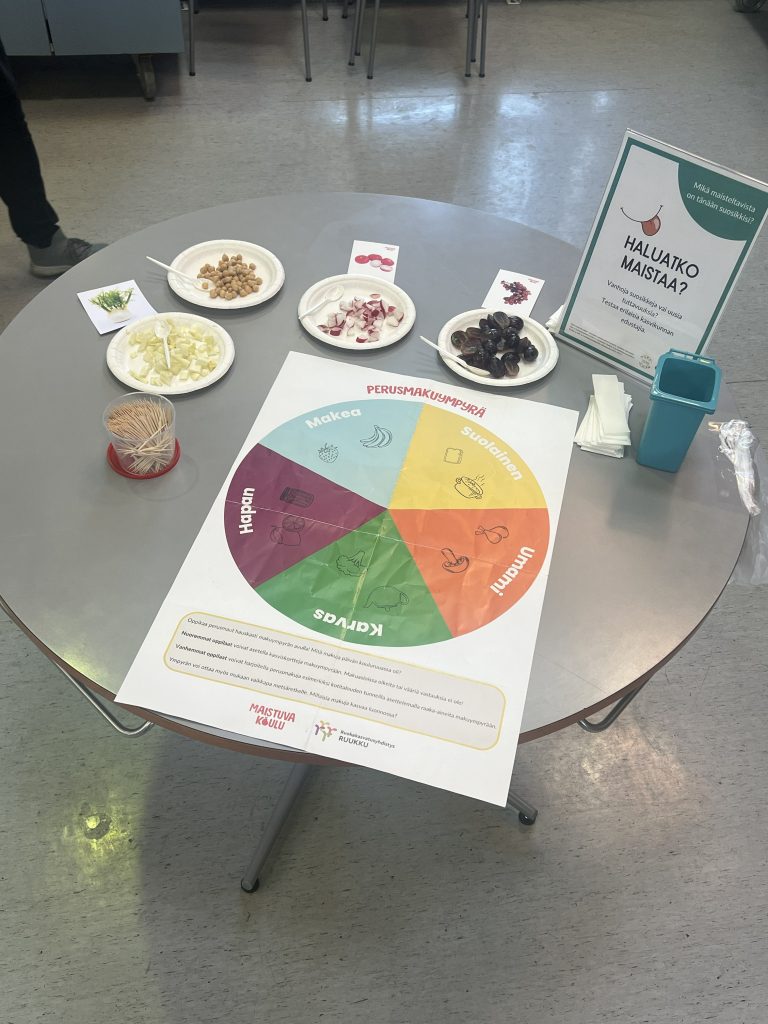
The tasting station from the school workshop in May 2026 in Finland
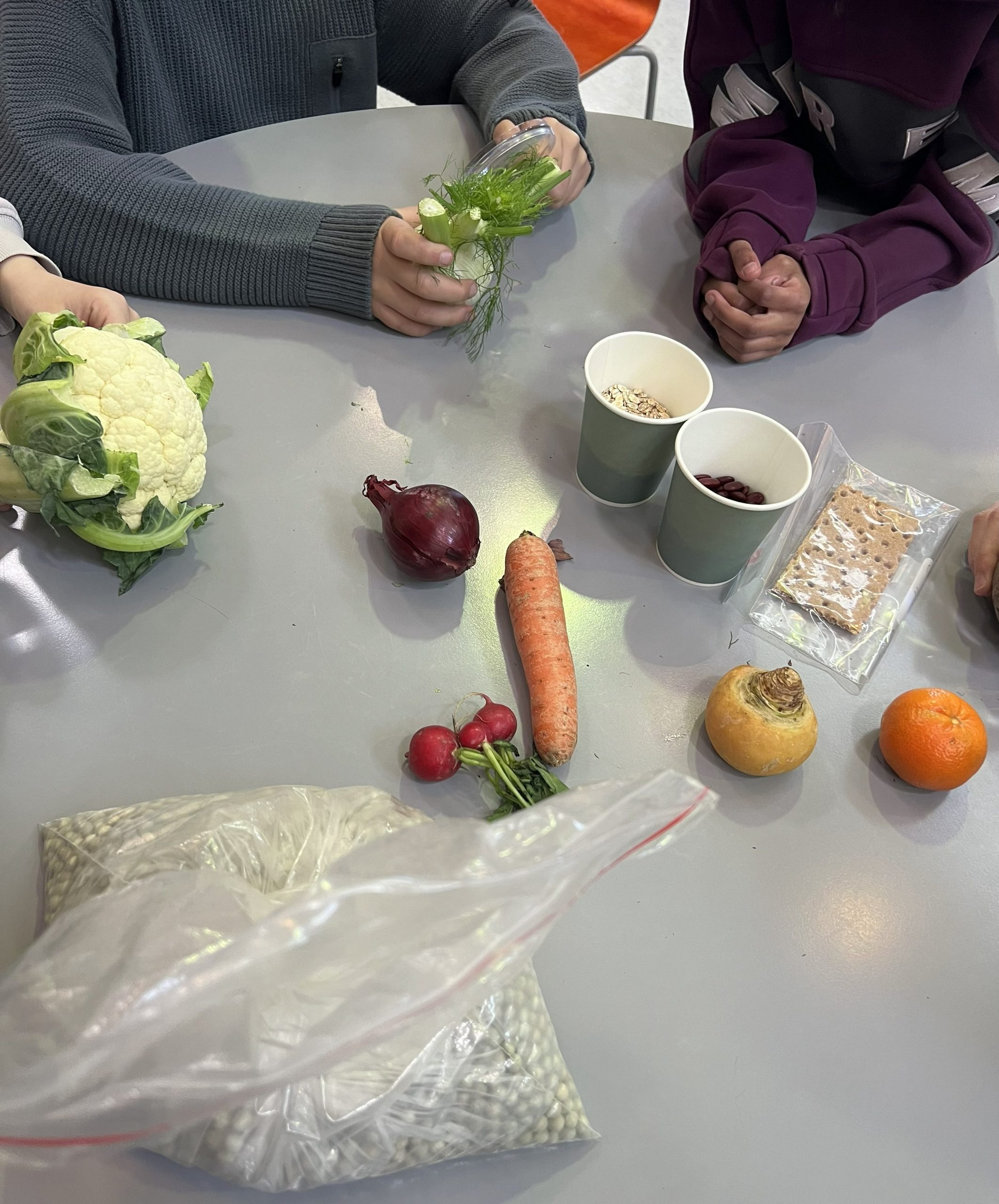
The touch station from the school workshop in May 2026 in Finland
In both Finland and the U.S., it was apparent that children are always most engaged with hands-on activities, especially when there is something to taste. Even when an activity was not a success, such as my butternut squash taste test, the attempt itself held value. However, when working with tight budgets, there are limits. In Finland, Ruukku is just one organization with limitations on how many workshops can be held in schools. Food education does not have to be a grand event every time. Even choosing a book to read aloud that explores themes of food, especially those representing different cultures, or incorporating math problems based on recipes, can support stronger food education in schools.
One of the strengths of my food education position at FoodCorps was that I could be fully committed to food education in one place and have a more lasting impact throughout the year. However, once a service member leaves, continuity depends on the next service member to carry that momentum forward. If no replacement service member follows, the responsibility of sustaining food education falls to teachers and staff. This came to be the case for many schools as FoodCorps lost its federal funding through AmeriCorps in 2025 due to federal budget cuts made by the current administration. However, the organization continues as an independent non-profit with reduced service members. They also have resources available for anyone to access (in English). Ruukku’s teacher-centered methodology acknowledges that educators are the foundation of lasting food education. Tasty school webpage provides teachers with resources to incorporate food education across many subjects and perspectives.
Many attitudes and feelings toward food are developed in childhood and can follow into adulthood. Incorporating food-related topics in school can help cultivate lifelong habits that support well-being and health. With the issues in school lunch consumption and a high prevalence of eating disorders in Finland, the need for food education in schools is clear and urgent. Teachers are the backbone of food education, making it possible and sustainable so that children can thrive and grow curious about all the flavors to taste in the world. However, teachers should not be solely responsible for carrying the weight of food education. That is why support from organizations like FoodCorps and Ruukku is so important. Ultimately, lasting success requires collaboration between educators, organizations, and communities to ensure sustainability and the best outcomes for students’ well-being.
Anna-Maya Sipilä
master student of human nutrition and food related behavior
University of Helsinki
23 June 2026